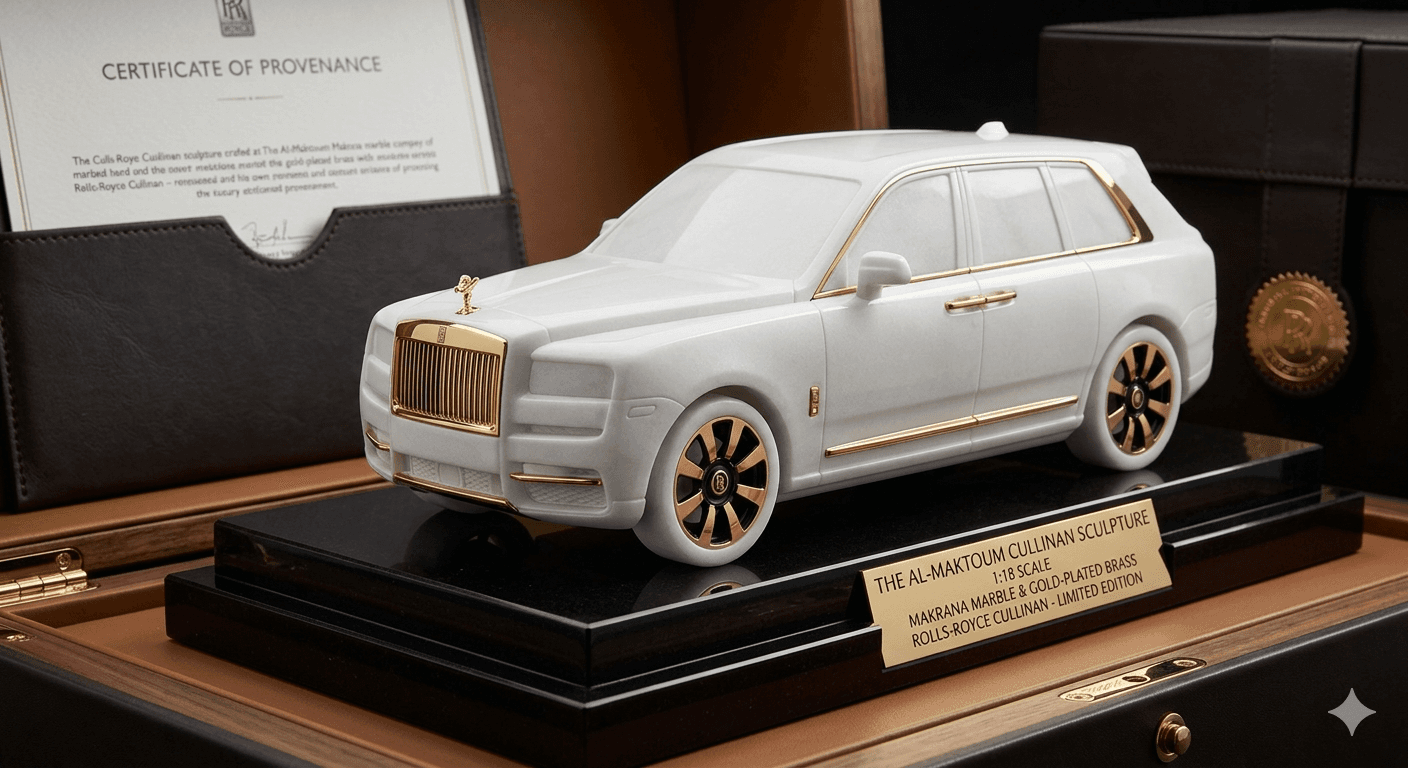
There is a question that serious collectors eventually ask: why does this marble stay white when everything else yellows? The answer lies 400 million years in the past — and it explains why the Taj Mahal looks the way it does today, and why Makrana marble commands rooms that other materials merely occupy.
The Geology of Permanence
Most marbles are limestone subjected to heat and pressure over millions of years. The process drives out impurities, recrystallises the calcium carbonate, and produces the interlocking crystal structure we call marble. What makes Makrana different is the purity of the source limestone, and the conditions under which it was transformed.
The Aravalli Range in Rajasthan is one of the oldest mountain systems on Earth — older than the Himalayas by hundreds of millions of years. The limestone deposits at Makrana formed roughly 480 million years ago during the Cambrian period, when the region was an ancient seabed. Over the following eons, tectonic pressure and geothermal heat acted on deposits of exceptional chemical purity, producing a marble with a calcite content of 98.8% — among the highest ever recorded in any natural stone.
Makrana marble carries a calcite content of 98.8% — among the highest ever recorded in any natural stone. That single number explains everything.
Why Most Marble Yellows — And Why Makrana Does Not
The yellowing and darkening observed in Italian marbles, Chinese marbles, and Indian marbles from other regions is caused by the same thing: mineral impurities in the stone. Iron compounds — common in most limestone deposits — oxidise over time when exposed to air and moisture. The result is a slow but irreversible colour shift toward cream, amber, and eventually brown.
Makrana marble contains iron at trace levels so low they are essentially undetectable. Without iron to oxidise, there is no mechanism for yellowing. The stone's crystalline structure is also unusually dense and interlocked, with almost no micro-porosity. Moisture does not penetrate. Organic compounds have nowhere to collect.
This is why the Taj Mahal, completed in 1653 and constructed entirely from Makrana White, appears in modern photographs as luminously white as it did in seventeenth-century Mughal miniatures. After nearly four centuries of exposure to sun, monsoon, and pollution, the stone has not yellowed. It has not cracked. In the sections preserved from surface restoration, it looks new.
What the Taj Mahal Actually Tells Collectors
The Taj Mahal is not merely a historical building. For a collector of permanent interior objects, it is evidence — the longest-running test of any decorative stone in recorded history. 370 years of data, in one of the world's most demanding environments.
No synthetic material has been tested against time in anything approaching the same way. Engineered quartz, resin composites, and treated limestones are sold with warranties measured in years. Makrana marble has a track record measured in centuries.
Engineered quartz comes with a warranty measured in years. Makrana marble has a track record measured in centuries.
This distinction matters enormously when an object is intended to outlast its buyer — to become part of an estate, to be placed in a principal residence or a private office and remain there unchanged for generations.
Why Replication Has Failed
Multiple attempts have been made over the past century to replicate Makrana's optical properties in other materials. None have succeeded. The specific combination of calcite purity, crystal structure, and the regional conditions that produced it cannot be recreated artificially. The Aravalli deposits represent a geological event that took 480 million years and will not repeat.
Quarrying from this specific belt is limited by both the finite nature of the deposit and regulations governing its extraction. What this means practically: any object carved from Makrana marble is already drawing on a finite and irreplaceable resource. The material itself will become rarer over coming decades, not more common.
What This Means for an Object in Your Interior
An interior object carved from Makrana marble is not simply decorative. It is a physical argument made in the most enduring material available to human craft.
- ◆It will not require resealing every five years like engineered stone
- ◆It will not fade under UV light the way coloured marble does
- ◆It will not develop micro-fractures from thermal cycling in air-conditioned interiors
- ◆Cleaned with a dry cloth, it requires nothing more
Placed in a reception hall, a private study, or an executive office, it will outlast every other object in the room. The furniture will be recovered, the rugs replaced, the artwork rotated. The marble piece will remain, unchanged — accumulating meaning rather than losing it.
That is not a marketing claim. It is what 480 million years of geological record, and 370 years of observable performance at the Taj Mahal, demonstrates.